
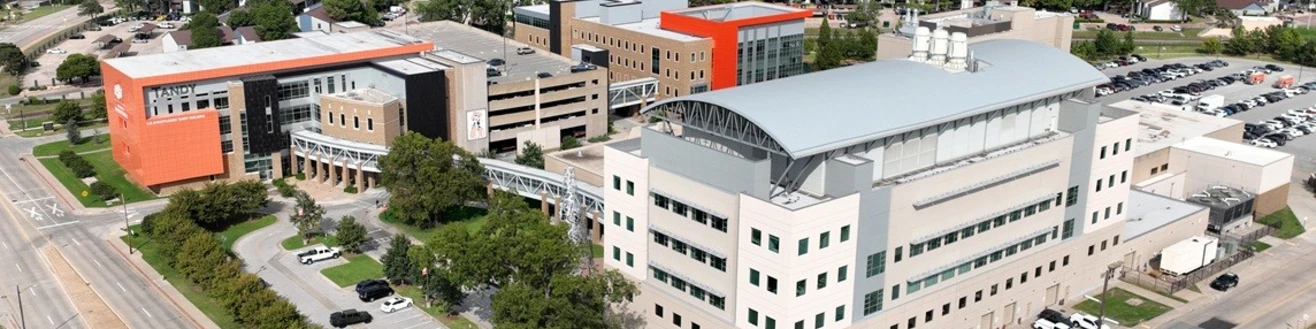
Oklahoma State University Center for Health Sciences
EXPERTS
- Associate Professor
- Anatomy & Cell Biology
- Associate ProfessorAnatomy & Cell Biology
Dr. Barta studies vertebrate growth, development, and intraspecific variation through the application of bone histology, computed tomography, and phylogenetic methods. He focuses primarily on the anatomy of dinosaurs (including birds), and other vertebrates from the Triassic and Permian periods. He is also interested in amniote eggs and nesting.
Dr. Barta studies vertebrate growth, development, and intraspecific variation through the application of bone histology, computed tomography, and phylogenetic methods. He focuses primarily on the anatomy of dinosaurs (including birds), and other vertebrates from the Triassic and Permian periods. He is also interested in amniote eggs and nesting.
- Faculty/Staff
- Oklahoma State University Center for Health Sciences
- Collaborative projects
- Media inquiries
- Speaking engagements
- English
- Anatomy & Cell Biology
Fields of Research- Palaeontology
- Evolutionary biology
- Animal growth and development
- Animal developmental and reproductive biology
- Vertebrate biology
- Animal systematics and taxonomy
- Phylogeny and comparative analysis
- Clinical Professor
- Center for Rural Health
- Clinical ProfessorCenter for Rural Health
- Faculty/Staff
- Oklahoma State University Center for Health Sciences
- English
- Center for Rural Health
- Associate Professor
- Psychology
- Associate ProfessorPsychology
My research examines health inequities, health promotion, and health behaviors among American Indian/Alaska Native (Indigenous) populations, including alcohol and substance use; exercise and eating patterns; and mental health. I also investigate social and individual determinants of health among AI/AN (Indigenous) peoples from both resilience and risk perspectives.My research examines health inequities, health promotion, and health behaviors among American Indian/Alaska Native (Indigenous) populations, including alcohol and substance use; exercise and eating patterns; and mental health. I also investigate social and individual determinants of health among AI/AN (Indigenous) peoples from both resilience and risk perspectives.- Faculty/Staff
- Oklahoma State University - Stillwater
- Oklahoma State University Center for Health Sciences
- Psychology
- Center for Indigenous Health Research and Policy
Fields of Research- Psychology
- Clinical and health psychology
- Public health
- Health sciences
- Cognitive and computational psychology
- Cognitive sciences
- Medical and health sciences
- Psychology and cognitive sciences
- Public health and health services
- Professor
- Center for Rural Health
- ProfessorCenter for Rural Health
Dr. Julie Croff is a Professor at Oklahoma State University Center for Health Sciences and a nationally recognized leader in substance use research, with a focus on prenatal exposures and early life adversity. She is Principal Investigator of the Center for Integrative Research on Childhood Adversity (CIRCA) and serves as the contact PI for the Oklahoma site of the HEALthy Brain and Child Development (HBCD) Study, a landmark national study examining how early environments and experiences shape child development.
Dr. Croff has been continuously funded by the National Institutes of Health since 2014 and has secured more than $43 million in extramural funding. Her research spans observational studies, clinical trials, and implementation science to advance evidence-based prevention, treatment, and recovery systems, with a focus on translating science into real-world impact across rural and underserved communities. Her work is particularly focused on understanding how experiences during pregnancy and early childhood influence health and development and on building systems that improve outcomes for individuals, families, and communities.
In addition her leadership at the OSU HBCD site, Dr. Croff serves in national leadership roles within the HBCD consortium, including as co-chair of the Biospecimen Working Group and previously as co-chair of the Rural and Sovereign Nations Working Group. These roles reflect her broader commitment to ensuring that large-scale research is scientifically rigorous while representing the experiences of rural and tribal communities.
Dr. Croff has contributed to state-level policy and legal efforts addressing substance use and is a member of Leadership Oklahoma Class 39. She is a Fellow and Past President of the American Academy of Health Behavior (AAHB) and previously served as a Governing Councilor of the American Public Health Association (APHA), contributing to national efforts to advance public health research and practice.
Outside of work, Dr. Croff enjoys volunteering with local organizations, cycling, and swimming. She and her husband, Ben, are raising two teenage children and share their home with an opinionated wirehaired dachshund.
Dr. Julie Croff is a Professor at Oklahoma State University Center for Health Sciences and a nationally recognized leader in substance use research, with a focus on prenatal exposures and early life adversity. She is Principal Investigator of the Center for Integrative Research on Childhood Adversity (CIRCA) and serves as the contact PI for the Oklahoma site of the HEALthy Brain and Child Development (HBCD) Study, a landmark national study examining how early environments and experiences shape child development.
Dr. Croff has been continuously funded by the National Institutes of Health since 2014 and has secured more than $43 million in extramural funding. Her research spans observational studies, clinical trials, and implementation science to advance evidence-based prevention, treatment, and recovery systems, with a focus on translating science into real-world impact across rural and underserved communities. Her work is particularly focused on understanding how experiences during pregnancy and early childhood influence health and development and on building systems that improve outcomes for individuals, families, and communities.
In addition her leadership at the OSU HBCD site, Dr. Croff serves in national leadership roles within the HBCD consortium, including as co-chair of the Biospecimen Working Group and previously as co-chair of the Rural and Sovereign Nations Working Group. These roles reflect her broader commitment to ensuring that large-scale research is scientifically rigorous while representing the experiences of rural and tribal communities.
Dr. Croff has contributed to state-level policy and legal efforts addressing substance use and is a member of Leadership Oklahoma Class 39. She is a Fellow and Past President of the American Academy of Health Behavior (AAHB) and previously served as a Governing Councilor of the American Public Health Association (APHA), contributing to national efforts to advance public health research and practice.
Outside of work, Dr. Croff enjoys volunteering with local organizations, cycling, and swimming. She and her husband, Ben, are raising two teenage children and share their home with an opinionated wirehaired dachshund.
- Faculty/Staff
- Oklahoma State University Center for Health Sciences
- English
- Center for Rural Health
- Center for Integrative Research on Childhood Adversity
Fields of Research- Public health
- Health and community services
- Health promotion
- Health systems
- Mental health services
- Preventative health care
- Adolescent health
- Infant and child health
- Professor
- Management Science & Information Systems
- ProfessorManagement Science & Information Systems
Dr. Dursun Delen is the holder of the William S. Spears Endowed Chair in Business Administration, Patterson Family Endowed Chair in Business Analytics, Director of Research for the Center for Health Systems Innovation, and Regents Professor of Management Science and Information Systems in the Spears School of Business at Oklahoma State University. Prior to his academic tenure at OSU, he worked for a privately owned research and consultancy company as a research scientist for five years, during which he led a number of advanced analytics research projects funded by federal agencies, including the Department of Defense (DoD), NASA, National Institute for Standards and Technology (NIST), among others. Dr. Delen has authored more than 250 peer-reviewed articles and 12 books and textbooks in the fields of Data Mining, Business Intelligence, Business Analytics, AI/Machine Learning, and Data Science. He is often invited to companies for consultancy engagements and national and international conferences for keynote addresses. He regularly chairs tracks and minitracks at various business analytics and information systems conferences. Currently, he is the editor-in-chief for the Journal of Business Analytics and the Journal of AI in Business (in Frontiers in Artificial Intelligence), senior editor for the Journal of Decision Support Systems, Decision Sciences, and Journal of Business Research, associate editor for Decision Analytics and International Journal of RF Technologies, and is on the editorial boards of several other academic journals. He has been the recipient of several research and teaching awards, including the prestigious Fulbright Scholar, regents' Distinguished Teacher and Researcher, president's Outstanding Researcher, and Big Data Mentor awards.
Research Interests:
Data Mining; Business Intelligence; AI/Machine Learning; Business Analytics; Data Science; Decision Support Systems; Knowledge Management; Business Process Modeling and Evaluation; Database Design and ImplementationDr. Dursun Delen is the holder of the William S. Spears Endowed Chair in Business Administration, Patterson Family Endowed Chair in Business Analytics, Director of Research for the Center for Health Systems Innovation, and Regents Professor of Management Science and Information Systems in the Spears School of Business at Oklahoma State University. Prior to his academic tenure at OSU, he worked for a privately owned research and consultancy company as a research scientist for five years, during which he led a number of advanced analytics research projects funded by federal agencies, including the Department of Defense (DoD), NASA, National Institute for Standards and Technology (NIST), among others. Dr. Delen has authored more than 250 peer-reviewed articles and 12 books and textbooks in the fields of Data Mining, Business Intelligence, Business Analytics, AI/Machine Learning, and Data Science. He is often invited to companies for consultancy engagements and national and international conferences for keynote addresses. He regularly chairs tracks and minitracks at various business analytics and information systems conferences. Currently, he is the editor-in-chief for the Journal of Business Analytics and the Journal of AI in Business (in Frontiers in Artificial Intelligence), senior editor for the Journal of Decision Support Systems, Decision Sciences, and Journal of Business Research, associate editor for Decision Analytics and International Journal of RF Technologies, and is on the editorial boards of several other academic journals. He has been the recipient of several research and teaching awards, including the prestigious Fulbright Scholar, regents' Distinguished Teacher and Researcher, president's Outstanding Researcher, and Big Data Mentor awards.
Research Interests:
Data Mining; Business Intelligence; AI/Machine Learning; Business Analytics; Data Science; Decision Support Systems; Knowledge Management; Business Process Modeling and Evaluation; Database Design and Implementation- Faculty/Staff
- Oklahoma State University - Stillwater
- Oklahoma State University Center for Health Sciences
- English
- Turkish
- Management Science & Information Systems
- Center for Health Systems Innovation
Fields of Research- Engineering
- Commerce, management, tourism and services
- Information and computing sciences
- Information systems
- Mathematical sciences
- Assistant Professor
- Pharmacology and Physiology
- Assistant ProfessorPharmacology and Physiology
Dr. Bart Ford is an Assistant Professor in the Department of Pharmacology and Physiology at the Oklahoma State University Center for Health Sciences, where he directs the Behavioral Immunology Lab of Tulsa (BILT), and an Affiliate Investigator with the OU-Tulsa Integrative Immunology Center. He earned his Ph.D. in Behavioral Immunology from the University of Tulsa, training in the laboratory of Dr. Jonathan Savitz at the Laureate Institute for Brain Research, where he also completed postdoctoral work.
Dr. Ford’s current research examines how childhood adversity becomes biologically embedded, driving long-term changes in immune function and gene expression that shape health across the lifespan. A central line of this work focuses on the conserved transcriptional response to adversity (CTRA), a pattern of immune gene regulation linked to chronic stress, to understand how early-life experiences influence inflammatory signaling, vaccine responses, and disease risk well into adulthood. This research draws on genomic and epigenomic approaches, including gene expression profiling and chromatin accessibility analysis, developed in part through specialized training in social genomics.
In ongoing collaborative work, Dr. Ford continues to study how cytomegalovirus (CMV) infection accelerates immune aging and contributes to the pathophysiology of major depressive disorder, including effects on brain structure and immune function.
Dr. Ford’s research has been supported by funding from the Brain and Behavior Research Foundation, the National Institutes of Health, and other federal and foundation sources. He is active in the Psychoneuroimmunology Research Society, where he chairs the Access and Opportunity Committee, and mentors graduate students and postdoctoral trainees in his lab.
Research Interests: Conserved transcriptional response to adversity · Childhood adversity & immune function · Social genomics · Psychoneuroimmunology · Cytomegalovirus & immune aging · Major depressive disorder
Dr. Bart Ford is an Assistant Professor in the Department of Pharmacology and Physiology at the Oklahoma State University Center for Health Sciences, where he directs the Behavioral Immunology Lab of Tulsa (BILT), and an Affiliate Investigator with the OU-Tulsa Integrative Immunology Center. He earned his Ph.D. in Behavioral Immunology from the University of Tulsa, training in the laboratory of Dr. Jonathan Savitz at the Laureate Institute for Brain Research, where he also completed postdoctoral work.
Dr. Ford’s current research examines how childhood adversity becomes biologically embedded, driving long-term changes in immune function and gene expression that shape health across the lifespan. A central line of this work focuses on the conserved transcriptional response to adversity (CTRA), a pattern of immune gene regulation linked to chronic stress, to understand how early-life experiences influence inflammatory signaling, vaccine responses, and disease risk well into adulthood. This research draws on genomic and epigenomic approaches, including gene expression profiling and chromatin accessibility analysis, developed in part through specialized training in social genomics.
In ongoing collaborative work, Dr. Ford continues to study how cytomegalovirus (CMV) infection accelerates immune aging and contributes to the pathophysiology of major depressive disorder, including effects on brain structure and immune function.
Dr. Ford’s research has been supported by funding from the Brain and Behavior Research Foundation, the National Institutes of Health, and other federal and foundation sources. He is active in the Psychoneuroimmunology Research Society, where he chairs the Access and Opportunity Committee, and mentors graduate students and postdoctoral trainees in his lab.
Research Interests: Conserved transcriptional response to adversity · Childhood adversity & immune function · Social genomics · Psychoneuroimmunology · Cytomegalovirus & immune aging · Major depressive disorder
- Faculty/Staff
- Oklahoma State University Center for Health Sciences
- English
- Pharmacology and Physiology
Fields of Research- Immunology
- Genomics and transcriptomics
- Clinical sciences
- Biological psychology
- Librarian II
- Medical Library
- Librarian IIMedical Library
- Faculty/Staff
- Oklahoma State University Center for Health Sciences
- Medical Library
Fields of Research- Library and information studies
- Information retrieval and web search
- Clinical Associate Professor
- Community Health Sciences, Counseling & Counseling Psychology
- Clinical Associate ProfessorCommunity Health Sciences, Counseling & Counseling Psychology
- Faculty/Staff
- Oklahoma State University Center for Health Sciences
- Psychiatry and Behavioral Sciences
Fields of Research- Psychology
- Public health
- Health sciences
- Clinical and health psychology
- Cognitive and computational psychology
- Clinical sciences
- Medical and health sciences
- Psychology and cognitive sciences
- Public health and health services
- Librarian
- Medical Library
- LibrarianMedical Library
Madison Hastings, MLIS, HS, is a Research Services Librarian at the Oklahoma State University College of Osteopathic Medicine at the Cherokee Nation. She supports faculty, students, and researchers with literature searching, systematic and scoping reviews, research consultations, and database searching.
Her interests include health sciences librarianship, systematic review methodology, AI in research, and ethical and effective use of emerging technologies. She is especially interested in helping researchers navigate evolving information landscapes while maintaining strong research practices, information quality, and research integrity.
Madison Hastings, MLIS, HS, is a Research Services Librarian at the Oklahoma State University College of Osteopathic Medicine at the Cherokee Nation. She supports faculty, students, and researchers with literature searching, systematic and scoping reviews, research consultations, and database searching.
Her interests include health sciences librarianship, systematic review methodology, AI in research, and ethical and effective use of emerging technologies. She is especially interested in helping researchers navigate evolving information landscapes while maintaining strong research practices, information quality, and research integrity.
- Faculty/Staff
- Oklahoma State University Center for Health Sciences
- Medical Library
Fields of Research- Library and information studies
- Library studies
- Student
- Oklahoma State University Center for Health Sciences
- Medical Student Research
- Associate Professor
- Biochemistry & Microbiology
- Associate ProfessorBiochemistry & Microbiology
- Faculty/Staff
- Oklahoma State University Center for Health Sciences
- Biochemistry & Microbiology
- Clinical Associate Professor
- Medical Education
- Clinical Associate ProfessorMedical Education
Osiyo (hello), I am an Associate Clinical Professor of Medical Education and Prevention Science MPH at the first tribally affiliated medical school, Oklahoma State University College of Osteopathic Medicine at the Cherokee Nation. My goals are too incorporate more academic and interventional strategies into my medical career. My experiences in residency as the co-chief of my family practice residency in my PGY-2 year. This experience helped me organize people and learn how to network as well as my duties to prepare didactic schedules and draft policy for our program in conjunction with two hospital administrations. In my PGY-3 year I started my Master of Public Health program at Emory Rollins School of Public Health with an emphasis on prevention science. This curriculum is focused on the design, implementation, and evaluation of public health interventions. During this academia, I had my practicum with the CDC Field Support Branch’s Division of Reproductive Health. I worked on three projects for them including qualitative analysis, a priori criteria for a systematic literature review, and an ethical considerations brief, all related to American Indian/Alaskan Native Maternal and Child Health Epidemiology. All of these works were kept internal for CDC use, but this work did earn me consideration for the Outstanding Practicum award at Emory Rollins School of Public Health. It was also during this time that I became a lifetime member of the American Evaluators Association. I was selected for the ACOFP Future Leaders program during this time. After graduation from residency, I started practice for Cherokee Nation Health Services as a primary care physician and was also named HPV Vaccination Physician Champion. For this role, I helped develop a questionnaire regarding all clinic staff attitudes, beliefs, and education on HPV vaccination. I have experience in NIH grant work recruiting medical students into cancer health disparities research. I received an ACOFP Distinguished Service award for work in advancing women in leadership and for my work in diversity, equity, and inclusion and became a fellow in 2025 earning Most Outstanding Scientific Research award. I am a Harvard Center for Health Equity, Education, and Advocacy Scholar and was a coach for one cohort cycle. At my current position as Associate Clinical Professor, I work in curriculum development as the course director for one course and site director for three, participate as the chair of the research committee and a member of the IRB for OSU-CHS. As a citizen of the Cherokee Nation who works with patients from many tribal nations and an associate clinical professor at the first tribally affiliated medical school in the country working with diverse groups, I have an avid interest in research that evaluates quality of life that is culturally and realistically responsive.
Osiyo (hello), I am an Associate Clinical Professor of Medical Education and Prevention Science MPH at the first tribally affiliated medical school, Oklahoma State University College of Osteopathic Medicine at the Cherokee Nation. My goals are too incorporate more academic and interventional strategies into my medical career. My experiences in residency as the co-chief of my family practice residency in my PGY-2 year. This experience helped me organize people and learn how to network as well as my duties to prepare didactic schedules and draft policy for our program in conjunction with two hospital administrations. In my PGY-3 year I started my Master of Public Health program at Emory Rollins School of Public Health with an emphasis on prevention science. This curriculum is focused on the design, implementation, and evaluation of public health interventions. During this academia, I had my practicum with the CDC Field Support Branch’s Division of Reproductive Health. I worked on three projects for them including qualitative analysis, a priori criteria for a systematic literature review, and an ethical considerations brief, all related to American Indian/Alaskan Native Maternal and Child Health Epidemiology. All of these works were kept internal for CDC use, but this work did earn me consideration for the Outstanding Practicum award at Emory Rollins School of Public Health. It was also during this time that I became a lifetime member of the American Evaluators Association. I was selected for the ACOFP Future Leaders program during this time. After graduation from residency, I started practice for Cherokee Nation Health Services as a primary care physician and was also named HPV Vaccination Physician Champion. For this role, I helped develop a questionnaire regarding all clinic staff attitudes, beliefs, and education on HPV vaccination. I have experience in NIH grant work recruiting medical students into cancer health disparities research. I received an ACOFP Distinguished Service award for work in advancing women in leadership and for my work in diversity, equity, and inclusion and became a fellow in 2025 earning Most Outstanding Scientific Research award. I am a Harvard Center for Health Equity, Education, and Advocacy Scholar and was a coach for one cohort cycle. At my current position as Associate Clinical Professor, I work in curriculum development as the course director for one course and site director for three, participate as the chair of the research committee and a member of the IRB for OSU-CHS. As a citizen of the Cherokee Nation who works with patients from many tribal nations and an associate clinical professor at the first tribally affiliated medical school in the country working with diverse groups, I have an avid interest in research that evaluates quality of life that is culturally and realistically responsive.
- Faculty/Staff
- Oklahoma State University Center for Health Sciences
- English
- Cherokee
- Medical Education
Fields of Research- Education assessment and evaluation
- Implementation science and evaluation
- Native American studies
- Clinical nutrition
- Social determinants of health
- Applied ethics
- Clinical Assistant Professor
- School of Health Care Administration
- Clinical Assistant ProfessorSchool of Health Care Administration
- Faculty/Staff
- Oklahoma State University Center for Health Sciences
- Health Care Administration
- Medical Student Researcher
- College of Osteopathic Medicine
- Medical Student ResearcherCollege of Osteopathic Medicine
- Student
- Oklahoma State University Center for Health Sciences
- Medical Student Research
- Medical Student Researcher
- College of Osteopathic Medicine
- Medical Student ResearcherCollege of Osteopathic Medicine
- Student
- Oklahoma State University Center for Health Sciences
- Medical Student Research
- Assistant Professor
- Management Science & Information Systems
- Assistant ProfessorManagement Science & Information Systems
- Faculty/Staff
- Oklahoma State University - Stillwater
- Oklahoma State University Center for Health Sciences
- Management Science & Information Systems
- Center for Health Systems Innovation
Fields of Research- Machine learning
- Deep learning
- Artificial intelligence
- Data engineering and data science
- Health informatics and information systems
- Optimisation
- Assistant Professor
- Pharmacology and Physiology
- Assistant ProfessorPharmacology and Physiology
Swarup Mitra, Ph.D. is an Assistant Professor in the Department of Pharmacology and Physiology at the Oklahoma State University Center for Health Sciences (OSU-CHS) in Tulsa, Oklahoma. Dr. Mitra's research focus on the neurobiology of substance use, stress-related disorders, chronic pain, neurodevelopmental outcomes, and glial cell biology, with a particular interest in how early-life experiences and environmental exposures shape brain function across the lifespan. Dr. Mitra's research integrates molecular, cellular, and behavioral neuroscience approaches to investigate the mechanisms through which opioids, stress, inflammation, and developmental adversity alter neural circuits and neuroimmune signaling. His work has contributed to understanding the roles of oligodendrocytes, microglia, astrocytes, mitochondrial function, and epigenetic regulation in neuropsychiatric and neurodevelopmental disorders. He is also actively involved in studying the long-term consequences of perinatal opioid exposure and early-life stress, with the goal of identifying novel therapeutic targets for substance use, pain, and stress-related brain dysfunction.
Swarup Mitra, Ph.D. is an Assistant Professor in the Department of Pharmacology and Physiology at the Oklahoma State University Center for Health Sciences (OSU-CHS) in Tulsa, Oklahoma. Dr. Mitra's research focus on the neurobiology of substance use, stress-related disorders, chronic pain, neurodevelopmental outcomes, and glial cell biology, with a particular interest in how early-life experiences and environmental exposures shape brain function across the lifespan. Dr. Mitra's research integrates molecular, cellular, and behavioral neuroscience approaches to investigate the mechanisms through which opioids, stress, inflammation, and developmental adversity alter neural circuits and neuroimmune signaling. His work has contributed to understanding the roles of oligodendrocytes, microglia, astrocytes, mitochondrial function, and epigenetic regulation in neuropsychiatric and neurodevelopmental disorders. He is also actively involved in studying the long-term consequences of perinatal opioid exposure and early-life stress, with the goal of identifying novel therapeutic targets for substance use, pain, and stress-related brain dysfunction.
- Faculty/Staff
- Oklahoma State University Center for Health Sciences
- Pharmacology and Physiology
- Professor
- Psychology
- ProfessorPsychology
- Faculty/Staff
- Oklahoma State University - Stillwater
- Oklahoma State University Center for Health Sciences
- Psychology
- Psychiatry and Behavioral Sciences
- Center for Integrative Research on Childhood Adversity
Fields of Research- Clinical and health psychology
- Social and affective neuroscience
- Applied and developmental psychology
- Psychology
- Clinical Professor
- Emergency Medicine
- Clinical ProfessorEmergency Medicine
- Faculty/Staff
- Oklahoma State University Center for Health Sciences
- Emergency Medicine
- Electronic Resources & Assessment Librarian
- Medical Library
- Electronic Resources & Assessment LibrarianMedical Library
- Faculty/Staff
- Oklahoma State University Center for Health Sciences
- English
- Medical Library
- Clinical Professor
- Obstetrics and Gynecology
- Clinical ProfessorObstetrics and Gynecology
- Faculty/Staff
- Oklahoma State University Center for Health Sciences
- Obstetrics and Gynecology
- Clinical Professor
- Medical Education
- Clinical ProfessorMedical Education
Kelly Rudd, PharmD, is a Professor of Medical Education and an Antithrombotic Stewardship Pharmacist at the Oklahoma State University Center for Health Sciences and College of Osteopathic Medicine in Tulsa, Oklahoma. She is a board-certified Antithrombotic Care Provider (CACP) and Pharmacotherapy Specialist (BCPS). Her clinical and research interests center on non-malignant hematology and thrombosis, including antithrombotic stewardship at the intersection of rural healthcare. She has authored multiple peer-reviewed publications and book chapters related to antithrombotic care, serves on the Anticoagulation Forum's Board of Directors, and is a Section Editor for the TH Open journal. Dr. Rudd has been recognized with multiple teaching and clinical excellence awards at OSU and was also awarded the Patient Safety and Clinical Pharmacy Services Collaborative Life-Saving Patient Safety Award by the US Department of Health and Human Services.
Kelly Rudd, PharmD, is a Professor of Medical Education and an Antithrombotic Stewardship Pharmacist at the Oklahoma State University Center for Health Sciences and College of Osteopathic Medicine in Tulsa, Oklahoma. She is a board-certified Antithrombotic Care Provider (CACP) and Pharmacotherapy Specialist (BCPS). Her clinical and research interests center on non-malignant hematology and thrombosis, including antithrombotic stewardship at the intersection of rural healthcare. She has authored multiple peer-reviewed publications and book chapters related to antithrombotic care, serves on the Anticoagulation Forum's Board of Directors, and is a Section Editor for the TH Open journal. Dr. Rudd has been recognized with multiple teaching and clinical excellence awards at OSU and was also awarded the Patient Safety and Clinical Pharmacy Services Collaborative Life-Saving Patient Safety Award by the US Department of Health and Human Services.
- Faculty/Staff
- Oklahoma State University Center for Health Sciences
- Medical Education
- Clinical Assistant Professor
- Biochemistry & Microbiology
- Clinical Assistant ProfessorBiochemistry & Microbiology
My passion lies at the intersection of bioinformatics, research, and mentorship. I thrive on leveraging big data to uncover new scientific insights while championing open science for broader collaboration. Beyond research, I find immense fulfillment in guiding students.
As a dedicated scientist and educator, I am eager to bring my research expertise, analytical skills, and enthusiasm for student mentorship to a dynamic academic environment. I look forward to making meaningful contributions to research, innovation, and cultivating the next generation of scientific thinkers.My passion lies at the intersection of bioinformatics, research, and mentorship. I thrive on leveraging big data to uncover new scientific insights while championing open science for broader collaboration. Beyond research, I find immense fulfillment in guiding students.
As a dedicated scientist and educator, I am eager to bring my research expertise, analytical skills, and enthusiasm for student mentorship to a dynamic academic environment. I look forward to making meaningful contributions to research, innovation, and cultivating the next generation of scientific thinkers.- Faculty/Staff
- Oklahoma State University Center for Health Sciences
- Biochemistry & Microbiology
- Associate Professor
- Pharmacology and Physiology
- Associate ProfessorPharmacology and Physiology
W. Kyle Simmons, Ph.D., is a Professor of Pharmacology and Physiology at Oklahoma State University Center for Health Sciences and Director of the OSU Biomedical Imaging Center. In 2026 he was appointed the Roger Hardesty Chair in Clinical Neuroscience at OSU-CHS. He earned his Ph.D. at Emory University, completed a postdoctoral fellowship in the NIMH Intramural Research Program, and has held research positions in both academia and industry. For more than two decades, his research has combined neuroimaging, psychophysiology, and assays of endocrine, metabolic, and immune signaling to investigate the biological determinants of depression, obesity, eating disorders, and substance use disorders. His current work focuses on developing new therapeutics for addiction, particularly GLP-1 receptor agonists.
Link: https://scholar.google.com/citations?user=gRjmf_AAAAAJ&hl=en
W. Kyle Simmons, Ph.D., is a Professor of Pharmacology and Physiology at Oklahoma State University Center for Health Sciences and Director of the OSU Biomedical Imaging Center. In 2026 he was appointed the Roger Hardesty Chair in Clinical Neuroscience at OSU-CHS. He earned his Ph.D. at Emory University, completed a postdoctoral fellowship in the NIMH Intramural Research Program, and has held research positions in both academia and industry. For more than two decades, his research has combined neuroimaging, psychophysiology, and assays of endocrine, metabolic, and immune signaling to investigate the biological determinants of depression, obesity, eating disorders, and substance use disorders. His current work focuses on developing new therapeutics for addiction, particularly GLP-1 receptor agonists.
Link: https://scholar.google.com/citations?user=gRjmf_AAAAAJ&hl=en
- Faculty/Staff
- Oklahoma State University Center for Health Sciences
- Pharmacology and Physiology
- Professor
- Anatomy & Cell Biology
- ProfessorAnatomy & Cell Biology
- Faculty/Staff
- Oklahoma State University Center for Health Sciences
- Anatomy & Cell Biology